 VapeWholesaleHub
Mods Strengths Ladder for a Balanced Cabinet — Replenishment Cycles
Treat mods as a repeat purchase category rather than a one off buy. That single change in framing alters almost every decision downstream, from carton size to how many strengths you list.
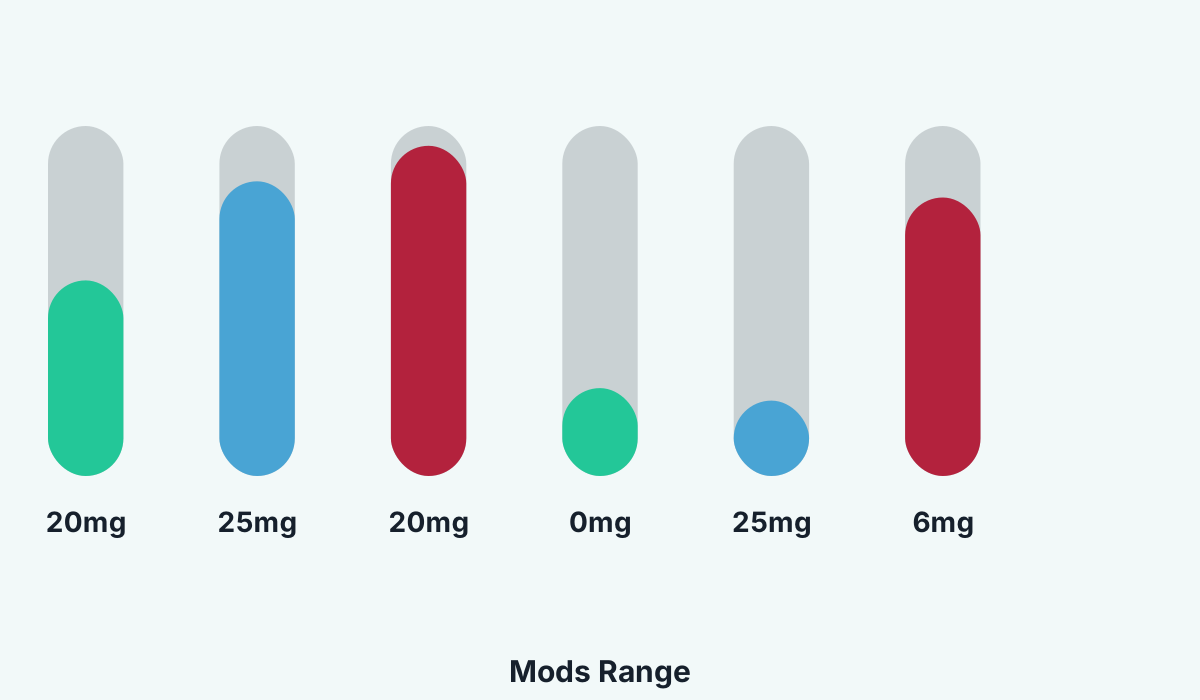
Getting Mods to Your Warehouse
Freight is the hidden half of mods unit economics. A denser master carton can save more per unit than a hard negotiation on factory price, because the saving repeats on every reorder rather than once.

How Mods Fits the Assortment
Mods sits at an interesting point in the assortment. It is familiar enough to be an impulse purchase and specific enough to build a repeat pattern around. Treating it as either pure commodity or pure specialty both lead to poor results.
One useful exercise: list every mods line you stock and mark the last date each one sold at full price. Anything without a recent full price sale is taking space from something that would use it better.
Modelling a Healthy Margin
Build mods price tiers around order sizes your customers actually place. Tiers that only make sense on a spreadsheet get ignored, and you end up discounting ad hoc instead.
When you model mods pricing, build in a realistic shrink figure. Even a well run line loses a small percentage to damage, expiry and sampling. Pretending that number is zero is how a healthy looking margin turns negative.
Indicative reference points for planning purposes: entry tier from USD 1.93 per unit at 2000 units, mid tier at USD 0.75, and volume tier at USD 0.65 for full container quantities. These figures move with specification, packaging and freight, so treat them as a shape rather than a quote.
Inspection Before Dispatch
Incoming inspection for mods is not about opening boxes at random. We weigh a sample of cartons, check batch codes against the production record, run a draw resistance measurement, and log the results so that a complaint three months later can be traced to a specific run.
Incoming inspection for mods is not about opening boxes at random. We weigh a sample of cartons, check batch codes against the production record, run a draw resistance measurement, and log the results so that a complaint three months later can be traced to a specific run.
- Model landed cost, not ex-works price, when comparing quotes.
- Keep sealed retained samples from every production batch.
- Agree the tolerance band in writing before approving artwork.
- Ask how the factory measures puff count, then compare like with like.
- Write the complaint threshold into the order terms.
Merchandising and Listing Tips
On shelf, mods sells on clarity. A plain shelf talker that states strength and flavour in two words outperforms a beautifully designed but vague display, because most purchase decisions here take under ten seconds.
Trends Worth Watching
One visible change in mods is the move towards clearer labelling and traceability. Retailers who adopted batch coding early are finding it much easier to work with larger distributors now.
One visible change in mods is the move towards clearer labelling and traceability. Retailers who adopted batch coding early are finding it much easier to work with larger distributors now.
Practical Checklist
- Confirm the current customs classification with your own broker.
- Plan the switch from air to sea freight before you need it.
- Model landed cost, not ex-works price, when comparing quotes.
- Check carton dimensions against your freight quote before confirming.
- Start with a mixed carton and let your own sell-through decide.
- Rotate stock by batch code rather than by delivery date.
Frequently Asked Questions
Can I visit the production facility?
Yes, and we encourage it for larger programmes. Visits are most useful when you already have a draft specification, because you can then check the specific processes behind the numbers you care about.
Can you match an existing product I already sell?
Often yes, provided we can measure it properly. Send a physical sample and we will report back on what can be matched, what will differ slightly, and why. An honest gap is more useful than a vague promise.
How are price changes handled on repeat orders?
{K} pricing is reviewed against input costs and volume rather than adjusted casually. Any change is confirmed in writing before the next order is scheduled, with the reason stated so you can judge it yourself.
What is the usual minimum order for mods?
For a standard production run the minimum is normally one master carton per flavour, though mixed cartons can be arranged for a first order. If you are testing the line, ask about a sample pack first and treat the freight as part of your research budget.
Is there support for in-store material?
Yes. Shelf talkers, counter cards and simple planogram suggestions are available for mods ranges that reach a sensible volume. Most retailers find the plain strength and flavour cards do the most work.
Next Step
Questions that are not answered here are usually the interesting ones. Reach out with the specifics of your market and we will answer with numbers rather than adjectives.
Related Reading
- Mods Reading Factory Capacity Honestly — Step by Step
- Mods Barcode and Labelling Requirements — UK and Ireland
- Mods Reorder Discipline for Busy Distributors — Plain Language
- Mods Carton Engineering and Freight Density — Specialist Vape Shops
- Mods Child Resistant Closure Considerations — Wholesale Clubs
- Mods Auditing Your Own Supply Chain — Entry-Level Price Points