 VapeWholesaleHub
Mods Warranty and After Sales: Setting Expectations — North America
A mods programme fails in predictable ways: a specification nobody wrote down, a sample nobody retained, and a lead time nobody stress tested. Here is how to close those three gaps before they cost you a container.
Inspection Before Dispatch
Keep a photo record of every mods approval sample. Written descriptions age badly; a dated photograph next to a delivered unit settles most arguments in seconds.
- Write the complaint threshold into the order terms.
- Ask how the factory measures puff count, then compare like with like.
- Confirm the current customs classification with your own broker.
- Rotate stock by batch code rather than by delivery date.
- Plan the switch from air to sea freight before you need it.
Trends Worth Watching
Flavour cycles in mods are shortening, which argues for smaller test orders and faster feedback loops rather than large speculative buys on a predicted winner.
Expect mods packaging requirements to keep tightening. Designs that leave room for additional labelling age better than tight layouts that need a full reprint to comply.
Getting Mods to Your Warehouse
Air freight makes sense for a first mods order when you need to test demand quickly, but almost every steady programme moves to sea freight once volumes stabilise. Planning that switch early avoids a painful margin squeeze later.
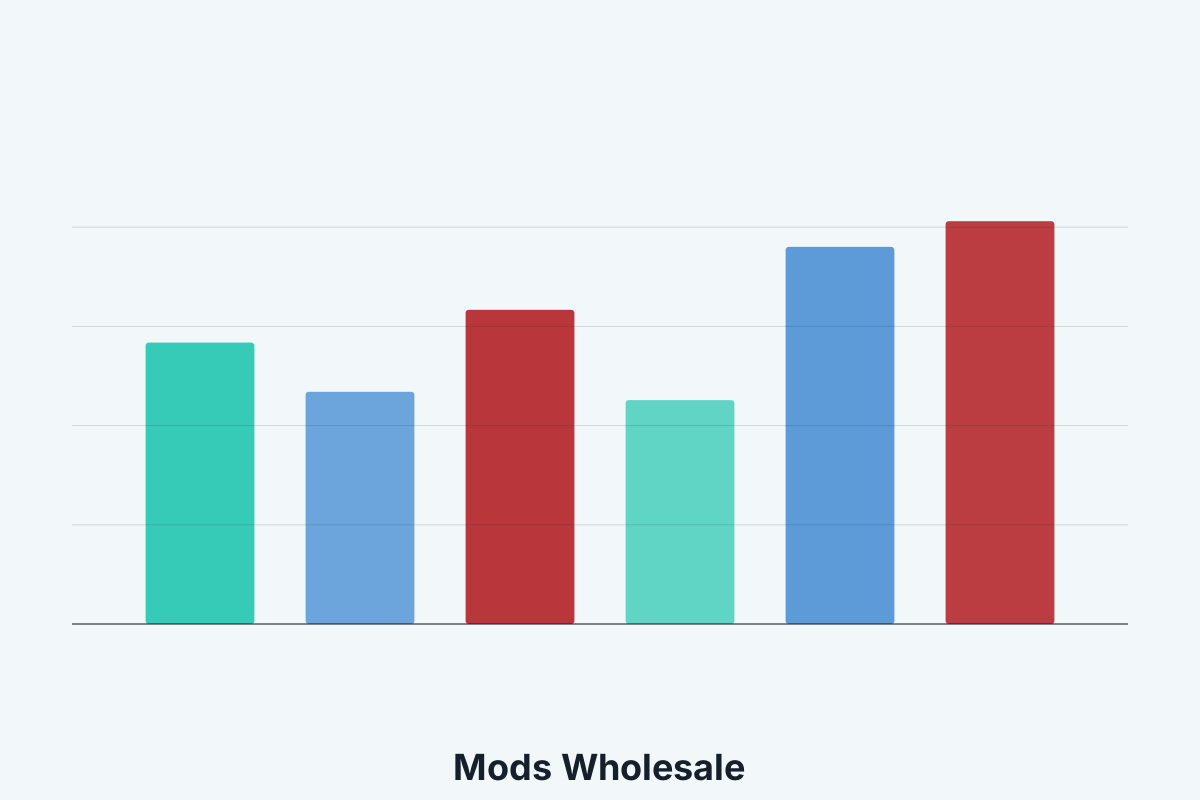
Modelling a Healthy Margin
Discounting mods to win shelf space tends to reset customer expectations permanently. Volume support in kind, such as display material, usually costs less in the long run.
Indicative reference points for planning purposes: entry tier from USD 1.39 per unit at 2000 units, mid tier at USD 1.23, and volume tier at USD 0.73 for full container quantities. These figures move with specification, packaging and freight, so treat them as a shape rather than a quote.
The Specification That Matters
Specification sheets are where a mods deal is won or quietly lost. Two samples can look and taste the same while using different coil wire, different wicking density and different tolerances on the mouthpiece. Those details decide how the unit behaves in week three rather than minute three.
| Product category | Open system |
|---|---|
| Resistance band | 1.2 - 1.4 ohm |
| Capacity tolerance | +/- 5% |
| Puff count method | Machine cycle 2s on / 18s off |
| Master carton | 120 units |
| Carton weight | 4.9 kg |
| Shelf life | 18 months |
| Storage | 15-25 C, dry, away from direct light |
Practical Checklist
- Model landed cost, not ex-works price, when comparing quotes.
- Confirm the current customs classification with your own broker.
- Rotate stock by batch code rather than by delivery date.
- Ask how the factory measures puff count, then compare like with like.
- Plan the switch from air to sea freight before you need it.
- Check carton dimensions against your freight quote before confirming.
Frequently Asked Questions
Can the packaging be customised?
Yes. Most mods programmes use private label packaging once volumes justify the printing plate. We supply dielines, check your artwork for print issues and hold approved files so reorders need no new setup.
Do you provide compliance documents?
Every shipment leaves with the documentation set relevant to your market, including batch records and test reports where required. Your local rules still determine what you must file, so confirm those with your broker before import.
Is there support for in-store material?
Yes. Shelf talkers, counter cards and simple planogram suggestions are available for mods ranges that reach a sensible volume. Most retailers find the plain strength and flavour cards do the most work.
What if a batch does not match the sample?
Keep the retained samples from the approval stage. If a delivered batch measurably differs, we compare against the retained set and resolve it against the production record. This is why we insist on sealed retained units from every run.
Next Step
Send us your current mods specification even if you are not planning to move suppliers. A second read of a document you use every month is usually worth the ten minutes.
Related Reading
- Mods Growing From Pallet to Container — Online Sellers
- Mods Colour Matching Across Production Runs — the Buying Desk
- Mods Growing From Pallet to Container — Convenience Retail
- Negotiating Mods Contracts With Overseas Factories — Premium Shelf Programmes
- Mods Reading Factory Capacity Honestly — Step by Step
- Mods Returns Data and What It Is Telling You — Oceania